Liverpool FC 2026-27: Squad, Players, Stadium, and Kits Guide

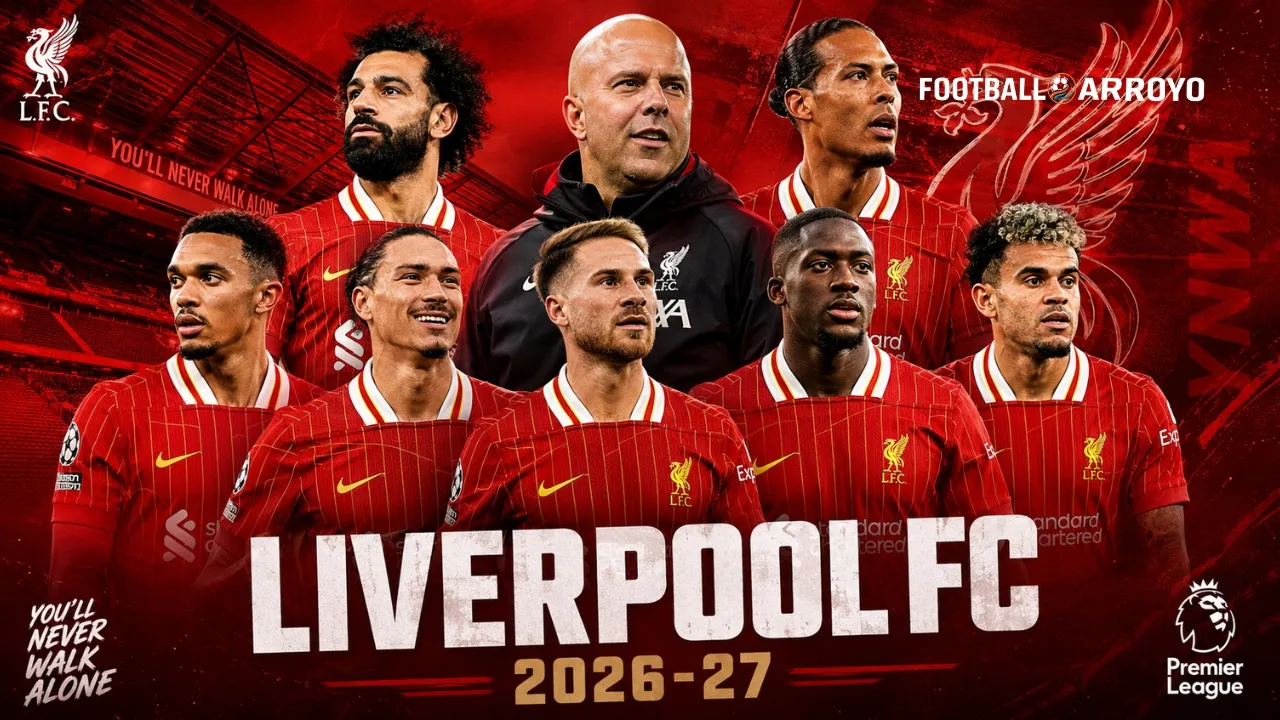
Liverpool FC 2026-27 is a high-stakes season where tactical precision, squad depth, and availability management will decide the ceiling. This profile refreshes the page with official squad cards, stronger structure, and season-ready context built for long-term search value.
The club enter this cycle with proven leadership and visible pressure. Expectations are title-level, yet the path depends on match control, smart rotation, and better conversion rates in tight fixtures.
This update resolves editor block issues, improves visual design, adds richer sections, and expands verified historical context so the page can stay useful across the full season.
Liverpool FC Club Profile Summary
| Liverpool FC Club Profile Summary | |
|---|---|
| Club | Liverpool Football Club |
| Founded | June 3, 1892 |
| Nickname | The Reds |
| Stadium | Anfield, 61,276 capacity |
| Manager | Arne Slot |
| League | English Premier League |
| Ownership | Fenway Sports Group |
| Club Colours | Red, white, and deep liver-red accents |
About Liverpool FC
Liverpool Football Club stand at the center of English football history and modern elite competition. The club began officially on June 3, 1892, yet its identity was shaped over decades through local rivalry, national dominance, and continental pressure games where small details decided major trophies.
The current Liverpool project combines history and reset. Supporters still expect title-level standards every season, but the mechanics of modern football keep changing. Recruitment has to align with tactical structure, sports science has to reduce soft-tissue drop-off across the run-in, and squad management has to absorb heavy calendar swings without losing rhythm.
What keeps Liverpool relevant is not one era or one manager. The club’s stronger pattern is operational continuity. Senior leadership, coaching, and player development repeatedly return to the same principles: aggressive mentality, technical quality under pressure, and game control through collective movement rather than individual chaos.
Anfield remains the symbolic and practical anchor of that identity. Home support still drives emotional tempo, but Liverpool’s top-level success now depends equally on away discipline, transition defence, and consistent finishing in matches where territory does not translate into immediate goals.
In 2026-27, the conversation is no longer about nostalgia. It is about execution. Liverpool have the depth to compete, but they need cleaner final-third decisions, stronger availability from key units, and steady leadership in fixtures that compress momentum across the league table.
Liverpool Squad 2026-27
The squad cards below use official Liverpool first-team data for position groups, shirt numbers, and player identity. Where a Football Arroyo profile exists, the card links directly to that page.
Goalkeepers



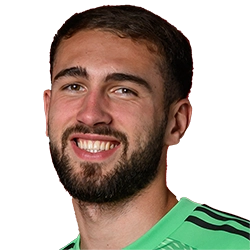
Harvey Davies
🏴 English
Profile coming soon
No. 95
Defenders


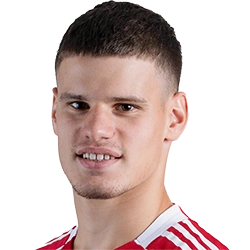



Andy Robertson
🏴 Scottish
Profile coming soon
No. 26


Midfielders
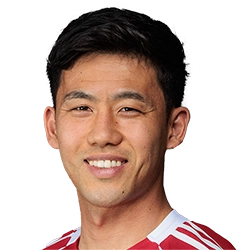





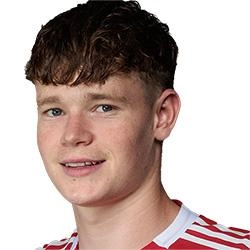
James McConnell
🏴 English
Profile coming soon
No. 53
Forwards





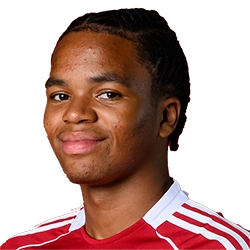
Rio Ngumoha
🏴 English
Profile coming soon
No. 73

Club Standings
Liverpool’s most recently confirmed top-flight title came in 2024-25, as listed in the official honours record. Final 2025-26 league placement is still pending full confirmation across end-of-season records, so any interim position should be treated as provisional until competition data locks.
| Season | Competition | Status | Notes |
|---|---|---|---|
| 2024-25 | Premier League | Champions (confirmed) | Listed in official Liverpool honours roll. |
| 2025-26 | Premier League | Final standing yet to be confirmed | Pending locked season-end confirmation. |
| 2026-27 | Premier League | In progress | Objective is sustained title contention. |
Manager: Arne Slot
Arne Slot remains Liverpool’s head coach on the official first-team staff listing. His model emphasizes controlled possession, compact spacing, and immediate pressure after turnovers.
In practical terms, Liverpool’s structure often starts from a 4-3-3 but flexes during build-up. Midfield positioning becomes crucial because one weak rest-defence moment can expose open channels against quick counter teams.
Slot’s success in this phase will depend on repeatable game-state control. Liverpool do not need tactical novelty every week; they need reliable execution in both high-tempo and low-tempo match scripts.
Stadium: Anfield
Anfield is still one of football’s defining competitive venues, and Liverpool’s official accessibility statement lists current capacity at 61,276. The modernized bowl changed logistics and sightlines, yet preserved the emotional pressure that opponents still describe as unique.

From a performance perspective, Anfield helps Liverpool set early tempo through coordinated pressing and crowd-triggered momentum surges. Home advantage, though, only converts to points when defensive line control and final-third decisions stay clean through the second half.
For 2026-27, Anfield’s strategic value goes beyond atmosphere. It is a points platform. Liverpool need to convert home consistency into table separation because away fixtures against direct rivals usually compress margin in spring.
Kit 2026-27
Liverpool continue with adidas as official kit supplier. The home visual identity remains rooted in red, while away and third releases rotate around seasonal design narratives and competition allocation needs.
Kit conversation may look cosmetic, but it reflects commercial and cultural continuity. Liverpool’s global brand strength works best when matchday identity and performance standards move together, especially in years with major squad transition.
Club History
Liverpool’s story begins with a local split that produced one of football’s biggest institutions. When Everton left Anfield in 1892, John Houlding and his allies formed Liverpool FC and Athletic Grounds Limited so top-level football would remain at the same stadium.
The early decades established Liverpool as a serious domestic force, but the club’s deeper identity came later. What separated Liverpool from many rivals was not only trophies. It was the way football standards, civic identity, and supporter culture started to move together.
Bill Shankly changed the scale of everything. He rebuilt training standards, sharpened recruitment logic, and gave the club a modern competitive language. His work turned Liverpool from a major name into a fully aligned football institution.
Shankly’s influence lasted because he created a structure his successors could extend. Bob Paisley inherited a winning machine and pushed it into one of Europe’s most efficient cycles, delivering European Cup victories in 1977, 1978, and 1981 through control, balance, and big-game nerve.
Joe Fagan and Kenny Dalglish carried that thread into the 1980s. Liverpool stayed dominant because the club did not abandon its core logic whenever conditions changed. Standards remained high, dressing-room authority remained strong, and match control mattered more than noise.
The club also lived through periods that shaped it far beyond football. The impact of Heysel, the European ban on English clubs, and the trauma of Hillsborough changed Liverpool’s public role and historical weight. Those events tied the club’s identity to dignity, community memory, and long campaigns for accountability.
In the Premier League era, Liverpool moved through uneven phases before stabilising again at elite level. The 2005 Champions League final in Istanbul remains one of football’s defining comeback nights, but it also underlined a harder truth: one historic result is not enough without long-term structure.
That structure returned under Jurgen Klopp. Liverpool’s recruitment sharpened, pressing identity became clear, and the relationship between coaching and analytics grew stronger. The Champions League title in 2019 and the league title in 2019-20 restored Liverpool’s place at the center of Europe’s top table.
Anfield also evolved with the team. The stadium remained emotionally central to the club, but redevelopment made it a stronger modern venue as well. Capacity growth, infrastructure changes, and matchday improvements gave Liverpool a better platform for both competitive and commercial strength.
Liverpool’s honours record matters because it shapes present expectations in a practical way. Players who join the club do not arrive at a project built around hopeful language. They enter an environment where domestic titles, European nights, and pressure fixtures are treated as normal parts of the job.
Recent years have shown that Liverpool’s biggest strength is adaptation without identity loss. The names change, the tactical details evolve, and the league becomes harder, yet the internal demand stays familiar: compete every week, manage pressure, and keep the team bigger than any individual story.
That is why the current phase matters. Arne Slot is not preserving a museum piece. He is trying to extend a living football model in a league where margins collapse quickly and patience is thin. Liverpool’s history carries weight, but the next chapter still depends on execution in the present tense.
Clubs Honours
Liverpool’s honours record remains one of the strongest in world football. Official club records and major historical references align on the key totals below, including 20 top-flight league titles and six European Cups.
| Competition | Titles | Latest Confirmed Win | Reference Basis |
|---|---|---|---|
| English top-flight league | 20 | 2024-25 | Liverpool official honours + historical records |
| European Cup / UEFA Champions League | 6 | 2018-19 | Official honours record |
| FA Cup | 8 | 2021-22 | Official honours record |
| League Cup / EFL Cup | 10 | 2023-24 | Official honours record |
| UEFA Cup / Europa League | 3 | 2000-01 | Official honours record and competition history |
| UEFA Super Cup | 4 | 2019 | Official honours record |
| FIFA Club World Cup | 1 | 2019 | Official honours record |
These numbers matter because they define Liverpool’s competitive baseline. Every new squad cycle is judged against this record, so domestic consistency and European control remain non-negotiable targets.
Rivals and Competitive
Liverpool’s rivalry map is both emotional and strategic. The Merseyside derby with Everton carries city identity and weekly pride, while meetings with Manchester United and Manchester City usually shape title probability and narrative momentum.
Against direct rivals, Liverpool must combine emotional intensity with tactical patience. Fast starts help, but sustained control in middle phases decides most top-six fixtures. When Liverpool manage tempo, protect central transitions, and execute set-piece details, they usually turn close games into high-value points.
Competitive context in 2026-27 is harsh. Several clubs now operate with deep squads and advanced recruitment models, so Liverpool’s edge will come from cohesion and availability more than headline spending alone.
Tactical Outlook 2026-27
Liverpool’s strongest tactical route this season is controlled aggression. That means pressing with intent but avoiding over-commitment when the first line is bypassed. The best Liverpool performances usually come when the midfield triangle controls second balls and prevents repeated defensive sprints toward their own goal.
In possession, Liverpool still need wider circulation before the final acceleration pass. Opponents now prepare compact blocks against them, so quick diagonal switches and blind-side runner timing become critical. If those patterns stay sharp, Liverpool can generate high-quality chances without relying on chaotic shot volume.
Set pieces can also shift the title equation. Margins in elite leagues are narrow, and Liverpool can gain decisive points by improving dead-ball efficiency at both ends. Better attack-side blocking routines and cleaner second-phase organisation should convert close draws into wins.
Another key tactical variable is game-state management after the opening goal. Liverpool have sometimes allowed momentum swings after scoring first. The 2026-27 objective should be calmer possession windows, smarter foul management in transition, and fewer emotional turnovers in central areas.
Season Pressure Points
Every elite season includes two or three pressure windows that define table outcomes. Liverpool’s first pressure point is fixture density across autumn and winter, where travel load and recovery quality can quickly expose squad depth. Rotation plans need to protect intensity without damaging cohesion.
The second pressure point is direct competition against top-six rivals around the turn of the year. Those matches carry six-point weight because they affect both Liverpool’s total and a rival’s total simultaneously. Controlled performances in those fixtures usually decide whether Liverpool chase, lead, or recover in spring.
The third pressure point is spring availability. Most title races are settled by which squad keeps core starters fit for the final run. Liverpool’s medical and performance structure must reduce recurrence issues and preserve match-readiness for high-minute players in midfield and attack.
If Liverpool navigate those windows with stability, the squad has enough quality to sustain a real challenge. The target is not short bursts of form. The target is repeatable execution from August to May, with fewer avoidable drops in concentration against lower-block opponents.
Transfer News & Rumours
Liverpool’s transfer cycle remains active around forward continuity, succession planning, and depth insurance in key zones. The four latest Football Arroyo Liverpool-linked transfer cards are listed below.
CARD 1
Headline: Mohamed Salah to Leave Liverpool: Al Ittihad Linked as Free Agent Move Looms
Category: Football News
Published: May 16, 2026
CARD 2
Headline: Denzel Dumfries to Arsenal or Liverpool: €25m Release Clause Looms for Inter Star
Category: Football News
Published: May 16, 2026
CARD 3
Headline: Yan Diomande to Liverpool: €97m Valuation Set for Mohamed Salah Successor
Category: Football News, Transfer News
Published: May 16, 2026
CARD 4
Headline: Darwin Núñez to Leave Liverpool? Reports Suggest Potential €80m Move to Atletico Madrid
Category: Football News
Published: May 14, 2026
Liverpool FAQ
Who is Liverpool manager for 2026-27?
Arne Slot remains Liverpool’s first-team head coach based on the official club staff listing. He leads tactical preparation, squad rotation plans, and matchday structure.
What is Anfield’s current capacity?
Liverpool’s official accessibility statement lists Anfield at 61,276 capacity. This reflects the post-expansion matchday configuration used for first-team fixtures.
Which signings define Liverpool’s current squad plan?
Official squad listings include major attacking and midfield additions, including Florian Wirtz and Alexander Isak. Final transfer movement remains active until the window closes.
Who captains Liverpool?
Virgil van Dijk continues as club captain in Liverpool’s first-team leadership structure. His role remains central to defensive organisation and dressing-room standards.
What shape does Arne Slot use most often?
Liverpool usually start from a 4-3-3 shape that can become a box midfield during build-up phases. The exact spacing changes by opposition pressing patterns.
Where does Liverpool train?
Liverpool train at the AXA Training Centre in Kirkby. The site supports first-team performance, recovery work, and integrated sports-science operations.
How many European Cups have Liverpool won?
Liverpool have won six European Cups, the highest tally for an English club. That total is listed in both official club honours records and major historical references.
Who is Liverpool’s top scorer for 2026-27?
The 2026-27 competitive cycle is still unfolding, so final top-scorer totals are yet to be confirmed. This section updates once official competition totals lock.
What are Liverpool’s primary kit colours in 2026-27?
The home identity remains Liverpool red, while away and third kit palettes follow official adidas launch cycles. Match allocation can vary by competition and fixture rules.
Who owns Liverpool FC?
Fenway Sports Group owns Liverpool through club holding structures. Strategic sporting and commercial planning remains under that ownership model.
Follow broader updates on Football Arroyo coverage.