Top 50 Best Players at FIFA World Cup 2026 – Complete Rankings

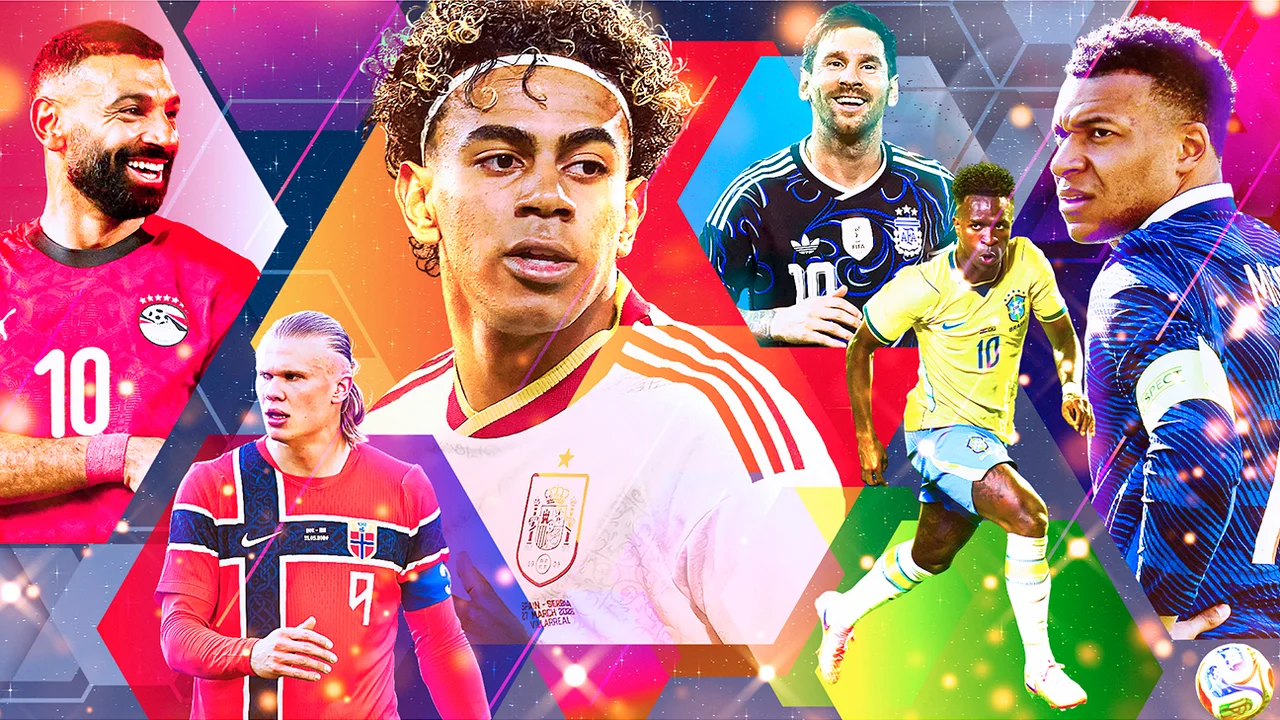
2026 FIFA World Cup has delivered unforgettable goals, dramatic knockout matches and breakout performances from players who were barely known outside their home countries before the tournament began.
Established superstars such as Lionel Messi, Kylian Mbappé, Harry Kane and Erling Haaland lived up to enormous expectations. At the same time, young talents including Gilberto Mora and Johan Manzambi used football’s biggest stage to introduce themselves to a global audience.
Not every player on this list reached the semifinals. Some produced exceptional individual performances despite their countries making early exits, while others became essential pieces of teams that exceeded expectations.
This Football Arroyo ranking considers:
- Individual performances throughout the tournament
- Goals, assists, saves and defensive contributions
- Influence on the player’s national team
- Performances in high-pressure matches
- Consistency from the group stage to the knockout rounds
- The importance of each player’s contribution to his country’s overall campaign
A player’s reputation or club career was not enough to earn a high position. This list focuses primarily on what happened during the 2026 World Cup.
Here is our countdown of the 50 best performers at the tournament.
50. Gilberto Mora — Mexico
Position: Midfielder
Age: 17
World Cup appearances: 4
Gilberto Mora entered the World Cup as one of Mexico’s most exciting prospects and left it looking like a genuine future star.
Mexico’s coaching staff handled the teenager carefully at the beginning of the tournament. Mora came off the bench in the opening match against South Africa before receiving his first start in the final group game against Czechia.
His confidence grew with every appearance. By the knockout stage, Mora looked comfortable receiving the ball under pressure, connecting midfield with attack and taking responsibility in important moments.
He started Mexico’s games against Ecuador and England, becoming the youngest Mexican player to appear at a World Cup and the second-youngest player ever to start a World Cup knockout match.
What stood out most was his composure. Mora rarely appeared overwhelmed by the occasion, even when facing experienced international defenders and midfielders.
Mexico’s campaign eventually ended against England, but the tournament may be remembered as the moment Mora announced himself to the wider football world.
At just 17, this should be only the beginning.
49. Vitinha — Portugal
Position: Midfielder
World Cup pass completion: 96%
Portugal’s World Cup ended earlier than expected, but Vitinha remained one of the team’s most dependable performers.
Playing alongside João Neves and Bruno Fernandes, the Paris Saint-Germain midfielder gave Portugal control in central areas. His quick decision-making and ability to escape pressure allowed his team to move the ball through crowded midfield zones.
Vitinha completed an outstanding 96% of his passes during the tournament. That figure reflects more than safe possession. He consistently positioned himself to receive the ball and helped Portugal maintain its rhythm against opponents who attempted to press aggressively.
Portugal reached the round of 16 before suffering a narrow 1-0 defeat to Spain. Although Vitinha did not produce a defining goal or assist, his technical quality remained visible throughout the campaign.
His ranking is limited by Portugal’s early elimination and the absence of a major knockout-stage moment. Nevertheless, he once again demonstrated why he is considered one of the most press-resistant midfielders in world football.
48. Marc Guéhi — England
Position: Defender
Team finish: Semifinals
Marc Guéhi arrived at the tournament with growing expectations and responded with an assured first World Cup campaign.
He began England’s opening game against Croatia on the bench but soon forced his way into Thomas Tuchel’s preferred defensive lineup. After starting against Ghana, Guéhi became a regular presence at the heart of England’s defense.
His positioning, strength and calm passing provided balance to a team that often needed its defenders to remain composed while building from the back.
One of Guéhi’s strongest performances came in the quarterfinal against Norway. Facing Erling Haaland is one of the toughest assignments in international football, but Guéhi competed aggressively and refused to allow the striker an easy evening.
He retained his place for the semifinal against Argentina and remained steady despite England eventually losing 2-1.
Guéhi may not have attracted the same headlines as England’s attacking stars, but his reliability was one of the main reasons the Three Lions reached the final four.
47. Matheus Cunha — Brazil
Position: Forward
World Cup goals: 2
Brazil’s campaign ended in disappointment, but Matheus Cunha provided several encouraging moments in attack.
He began the tournament as a substitute against Morocco and made a positive impression after entering the match. That performance earned him a place in the starting lineup against Haiti, where he scored twice in a 3-0 victory.
Cunha’s value came from his versatility. Rather than remaining in a fixed center-forward position, he regularly dropped deeper, moved into wide spaces and connected with Brazil’s other attackers.
His movement made Brazil less predictable and gave the midfield another passing option between the lines.
Cunha also earned an early penalty during the round-of-16 defeat to Norway. Brazil failed to convert the opportunity, and a 2-1 loss brought its tournament to a premature conclusion.
Although his country did not progress as far as expected, Cunha’s two goals and intelligent link-up play made him one of Brazil’s more effective performers.
46. Cristian Romero — Argentina
Position: Defender
Team finish: Finalist
Cristian Romero has once again brought aggression, intensity and personality to Argentina’s defense.
The center-back featured in every Argentina match apart from the final group-stage fixture against Jordan. He also made important contributions at the opposite end of the pitch.
His header helped force the own goal that proved decisive against Cape Verde in the round of 32. Romero then scored against Egypt in the following knockout round.
Alongside Lisandro Martínez, he has formed a combative central-defensive partnership. Both players defend proactively, challenge attackers early and play with the emotional intensity that has become a defining feature of Lionel Scaloni’s Argentina.
Romero can occasionally operate too close to the limit, but that aggression is also part of what makes him effective. He steps forward confidently, competes for difficult balls and is comfortable passing through an opponent’s first line of pressure.
Argentina’s attack has received most of the attention during its run to the final, but Romero’s presence has remained vital to the defending champion’s structure.
45. Leandro Trossard — Belgium
Position: Forward
World Cup goals: 2
World Cup assists: 2
Leandro Trossard was one of the most productive creative players at the 2026 World Cup.
The Belgian forward completed his tournament with two goals and two assists while helping his country reach the quarterfinals.
Trossard was particularly effective when drifting inside from the left. His movement allowed him to find gaps between opposing midfielders and defenders, where he could turn, combine with teammates or deliver the final pass.
His best performance came in Belgium’s convincing 4-1 round-of-16 victory over the United States. Trossard repeatedly found space on the left side and played a major role in dismantling the American defense.
He also finished Belgium’s campaign among the tournament leaders for chances created, behind only Lionel Messi at the time the ranking was compiled.
Belgium was eventually eliminated by Spain, but Trossard’s intelligent movement and consistent creativity made him one of the strongest performers in a team transitioning away from its previous golden generation.
44. Yassine Bounou — Morocco
Position: Goalkeeper
Team finish: Quarterfinals
Yassine Bounou delivered another impressive World Cup for Morocco.
The experienced goalkeeper was already one of the heroes of Morocco’s historic 2022 semifinal run. Four years later, he again produced decisive saves as the Atlas Lions reached the quarterfinals.
Bounou kept a clean sheet in Morocco’s important 1-0 group-stage victory over Scotland. In the round of 32, he saved Crysencio Summerville’s penalty during a shootout win against the Netherlands.
He followed that performance with another clean sheet as Morocco defeated Canada 3-0 and became the first African team to reach the quarterfinals at consecutive World Cups.
Even in defeat against France, Bounou provided another memorable moment by denying Kylian Mbappé from the penalty spot.
Goalkeepers are often judged by what they do in a handful of decisive seconds. Bounou repeatedly delivered in precisely those situations, combining sharp reflexes with the calmness required in high-pressure knockout matches.
Morocco did not repeat its semifinal appearance, but Bounou once again strengthened his reputation as one of Africa’s greatest international goalkeepers.
43. Virgil van Dijk — Netherlands
Position: Defender
World Cup goals: 1
World Cup assists: 1
The Netherlands suffered a painful early exit, but Virgil van Dijk still produced several strong performances in what may have been his final World Cup.
The Dutch captain scored in a 2-2 opening draw against Japan before leading his team through victories over Sweden and Tunisia. He also supplied an assist in the 3-1 win over Tunisia as the Netherlands finished top of its group.
Van Dijk brought authority to the back line, particularly when defending aerial balls and organizing the players around him. His passing also helped the Netherlands begin attacks from deeper positions.
The round-of-32 match against Morocco ended in heartbreak. The Netherlands appeared close to protecting a 1-0 advantage, but a stoppage-time equalizer forced extra time before Morocco advanced through a penalty shootout.
At 34 during the tournament, Van Dijk remained an influential leader and a physically commanding defender.
Whether or not he returns for another World Cup, his performances in 2026 added another respectable chapter to an outstanding international career.
42. João Neves — Portugal
Position: Midfielder
World Cup goals: 1
João Neves brought energy, technical quality and defensive commitment to Portugal’s midfield.
The 21-year-old made an immediate impact in the opening match against DR Congo. He scored Portugal’s goal in a 1-1 draw and was named Player of the Match.
Neves continued to operate alongside Vitinha and Bruno Fernandes, giving Portugal a midfielder capable of pressing opponents, recovering possession and quickly moving the ball forward.
His greatest strength is the completeness of his game. Neves is comfortable receiving possession in tight areas, but he is equally willing to chase runners, compete for loose balls and perform the less glamorous defensive work.
Portugal’s 1-0 round-of-16 defeat to Spain prevented him from making a deeper impact on the tournament. Even so, his performances offered further evidence that he can become a central figure for his national team.
With Neves and Vitinha still entering their prime years, Portugal possesses the foundation of a midfield that could remain competitive for several major tournaments.
41. Jordan Pickford — England
Position: Goalkeeper
Team finish: Semifinals
Jordan Pickford produced one of his most consistent major international tournaments for England.
Already established as the country’s first-choice goalkeeper, Pickford entered the 2026 World Cup with extensive experience. His familiarity with major tournament pressure was visible throughout England’s run to the semifinals.
He made important saves at several stages of the competition and provided confidence behind the defensive line.
Pickford was especially busy during England’s semifinal against Argentina. After the Three Lions took the lead, Argentina increased the pressure and created a series of dangerous opportunities.
The goalkeeper repeatedly intervened to protect England’s advantage. He could not prevent Enzo Fernández from scoring the equalizer or Lautaro Martínez from producing the late winner, but without Pickford’s saves, the match could have been decided much earlier.
England once again left a major tournament with disappointment, yet Pickford’s position was strengthened rather than questioned.
He was reliable, vocal and composed—the qualities England needed from its most experienced defensive player.
40. Manuel Akanji — Switzerland
Position: Defender
Manuel Akanji once again proved why he is regarded as one of Europe’s most dependable center-backs.
Switzerland reached the quarterfinals largely because of its defensive organization, and Akanji was at the heart of that success. His anticipation, calm passing and leadership helped Switzerland frustrate several technically gifted opponents throughout the tournament.
Even though Switzerland eventually lost to Argentina, Akanji was among the team’s standout performers and consistently handled some of the world’s most dangerous forwards.
39. Alexis Mac Allister — Argentina
Position: Midfielder
Mac Allister quietly became one of Argentina’s most valuable players.
While Lionel Messi and Julián Álvarez attracted most of the headlines, Mac Allister connected every area of the pitch. His passing between the lines, defensive work rate and intelligent positioning allowed Argentina to maintain balance during difficult moments.
His ability to recover possession before launching quick attacks became one of Lionel Scaloni’s biggest tactical strengths.
38. Emiliano Martínez — Argentina
Position: Goalkeeper
Argentina’s goalkeeper once again demonstrated why he remains one of football’s biggest-game specialists.
Martínez made several important saves throughout the tournament while commanding his penalty area with confidence. His distribution also helped Argentina launch dangerous counterattacks after recovering possession.
Although he wasn’t forced into as many spectacular saves as in Qatar 2022, his consistency gave Argentina tremendous security throughout its run to the final.
37. Rodrygo — Brazil
Position: Forward
Brazil expected Rodrygo to become one of the tournament’s stars, and despite the team’s early exit, he still delivered several impressive moments.
His pace, dribbling and creativity constantly stretched opposing defenses. Rodrygo remained Brazil’s most dangerous attacking player during several matches and created opportunities even when service around him was limited.
The disappointment of Brazil’s elimination prevented him from climbing higher in the rankings.
36. Ousmane Dembélé — France
Position: Winger
France once again relied on Dembélé’s explosive speed and unpredictability.
Whether starting wide or drifting inside, the French winger repeatedly forced defenders into difficult one-on-one situations. His acceleration created space for teammates while adding another dimension to France’s attack.
Although not every final pass resulted in a goal, his overall influence remained enormous throughout France’s run to the semifinals.
35. Harry Kane — England
Position: Striker
England’s captain once again led from the front.
Kane combined goals with intelligent link-up play, often dropping deep to help England progress the ball before arriving inside the penalty area at exactly the right moment.
His leadership remained just as important as his finishing. Younger teammates consistently looked toward Kane during difficult periods of matches.
While England narrowly missed another World Cup final, Kane once again proved why he remains among international football’s elite forwards.
34. Achraf Hakimi — Morocco
Position: Right-back
Hakimi delivered another outstanding World Cup.
His ability to contribute at both ends of the pitch makes him one of the world’s complete full-backs. Defensively, he handled dangerous wingers with confidence. Going forward, his overlapping runs constantly created additional attacking options.
Morocco’s quarterfinal finish was another historic achievement, and Hakimi played a leading role throughout the campaign.
33. Gianluigi Donnarumma — Italy
Position: Goalkeeper
Italy’s return to the World Cup featured another excellent tournament from Donnarumma.
The goalkeeper made numerous high-pressure saves while organizing one of the tournament’s strongest defensive units.
His reflexes inside the six-yard box and calmness during aerial situations repeatedly kept Italy in matches, reinforcing his reputation as one of international football’s premier goalkeepers.
32. Lautaro Martínez — Argentina
Position: Forward
Lautaro Martínez embraced his role perfectly.
Whether starting matches or coming off the bench, the Inter Milan striker consistently provided energy, pressing and clinical finishing.
His intelligent movement inside the penalty area created space for Messi and Álvarez while also making him a constant scoring threat himself.
His contributions became increasingly valuable as Argentina advanced through the knockout rounds.
31. Bukayo Saka — England
Position: Winger
Bukayo Saka once again demonstrated why he has become one of England’s most reliable attacking players.
His combination of pace, technical ability and decision-making caused problems for defenders throughout the tournament.
Unlike many traditional wingers, Saka consistently balanced creativity with defensive responsibility, helping England control matches from both sides of the ball.
His performances further strengthened his reputation as one of the world’s best young attackers.
30. Bruno Fernandes — Portugal
Position: Midfielder
Bruno Fernandes once again became Portugal’s creative engine.
His vision, passing range and willingness to take responsibility in possession allowed Portugal to create chances against organized defenses. Fernandes regularly switched play, delivered dangerous set pieces and looked for forward passes that broke defensive lines.
Although Portugal’s tournament ended earlier than expected, their captain remained one of the competition’s most productive playmakers.
29. Julián Álvarez — Argentina
Position: Forward
Álvarez continued to prove why he has become one of the world’s most complete strikers.
His relentless pressing forced defenders into mistakes, while his intelligent movement constantly created space for Lionel Messi and Argentina’s midfield runners.
Beyond his goals, Álvarez’s work rate without the ball made him indispensable to Lionel Scaloni’s tactical system.
28. Rodri — Spain
Position: Defensive Midfielder
Spain’s rhythm begins with Rodri.
The Manchester City midfielder controlled possession throughout the tournament, dictating tempo while protecting Spain’s defense whenever possession was lost.
His ability to recycle attacks, intercept passes and remain composed under pressure made him one of the tournament’s most influential midfielders.
Many of Spain’s best attacking sequences started with Rodri winning the ball deep before calmly progressing play into midfield.
27. Khvicha Kvaratskhelia — Georgia
Position: Winger
Even though Georgia did not make a deep run, Kvaratskhelia reminded everyone why he is among Europe’s most exciting attacking players.
His direct running, close control and willingness to attack defenders created danger every time he received possession.
Opponents frequently doubled up on him, yet he still managed to produce moments of individual brilliance that kept Georgia competitive.
26. Pedri — Spain
Position: Midfielder
Pedri quietly produced another outstanding major tournament.
His intelligence between the lines allowed Spain to dominate possession against almost every opponent. Few midfielders combined technical quality with tactical awareness as effectively as the Barcelona playmaker.
Pedri rarely wasted possession and consistently found teammates in advanced positions with perfectly weighted passes.
His partnership with Rodri became one of Spain’s greatest strengths throughout the competition.
25. William Saliba — France
Position: Defender
Saliba continued his rise among the world’s elite central defenders.
His calmness under pressure, recovery pace and ability to defend one-on-one situations helped France reach another World Cup semifinal.
Whether defending crosses or building attacks from the back, Saliba delivered mature performances throughout the tournament.
24. Cole Palmer — England
Position: Attacking Midfielder
Cole Palmer embraced the pressure of his first World Cup with remarkable confidence.
Operating between midfield and attack, Palmer consistently found dangerous pockets of space and linked England’s midfield with its forwards.
His composure in front of goal, combined with excellent decision-making in the final third, made him one of England’s most dangerous attacking players.
23. Désiré Doué — France
Position: Attacking Midfielder
One of the breakout stars of the tournament, Doué combined fearless dribbling with impressive creativity.
The young French playmaker repeatedly challenged defenders and looked comfortable despite the enormous pressure of international football.
His performances suggest France has discovered another exciting attacking talent capable of becoming a key player for years to come.
22. Enzo Fernández — Argentina
Position: Midfielder
Enzo Fernández once again delivered on football’s biggest stage.
His ability to dictate possession while contributing defensively allowed Argentina to remain balanced throughout the tournament.
Fernández also showed his quality in advanced areas, arriving late into the penalty area and creating chances with incisive passing.
His leadership in midfield continued to grow as Argentina advanced through the knockout rounds.
21. Nico Williams — Spain
Position: Winger
Nico Williams remained one of the tournament’s most entertaining wide players.
His acceleration, dribbling and ability to isolate defenders transformed Spain’s attack whenever he received possession in space.
Williams consistently stretched opposing back lines, opening central passing lanes for Spain’s midfielders while also contributing with goals and assists.
His partnership with Spain’s other attacking players became increasingly dangerous as the tournament progressed.
20. Jamal Musiala — Germany
Position: Attacking Midfielder
Germany’s World Cup campaign ended earlier than expected, but Jamal Musiala once again demonstrated why he is considered one of football’s most gifted attacking midfielders.
His close control, quick changes of direction and ability to eliminate defenders in tight spaces made him Germany’s primary creative outlet. Even when opponents crowded the midfield, Musiala consistently found ways to progress the ball into dangerous areas.
Although Germany fell short of its ultimate objective, Musiala’s performances reinforced his status as one of the game’s brightest young stars.
19. Lautaro Martínez — Argentina
Position: Forward
Lautaro Martínez continued to prove his value throughout Argentina’s run to the final.
Whether starting or entering from the bench, the Inter Milan striker brought relentless pressing, intelligent movement and clinical finishing. His willingness to sacrifice for the team allowed Argentina’s attack to remain dynamic regardless of the match situation.
His late winner against England in the semifinal highlighted his ability to deliver when Argentina needed him most.
18. Rayan Cherki — France
Position: Attacking Midfielder
Rayan Cherki emerged as one of France’s most exciting creative forces.
Operating between the lines, Cherki repeatedly unlocked defenses with clever passing and fearless dribbling. His confidence in one-on-one situations gave France another unpredictable attacking option alongside its established stars.
At only 22 years old, Cherki appears destined to play a leading role for France in future international tournaments.
17. Jude Bellingham — England
Position: Midfielder
Jude Bellingham once again showcased his complete midfield game.
Comfortable defending, carrying the ball forward and creating chances, Bellingham influenced matches in nearly every phase of play. His leadership also continued to grow despite his young age.
England relied heavily on his energy during difficult moments, particularly in knockout matches where midfield battles often determined the outcome.
16. Mikel Oyarzabal — Spain
Position: Forward
Spain’s experienced forward produced one of the finest tournaments of his international career.
Oyarzabal consistently found dangerous positions inside the penalty area while contributing important goals during Spain’s march to the final. His intelligent movement complemented the pace of Nico Williams and the creativity of Spain’s midfield.
His ability to finish chances efficiently made him one of Spain’s most reliable attacking players.
15. Désiré Doué — France
Position: Attacking Midfielder
Few young players raised their reputation more during the 2026 World Cup than Désiré Doué.
The French playmaker combined flair with maturity, showing confidence in high-pressure situations against elite opponents. His dribbling ability repeatedly forced defenders out of position, creating opportunities for teammates as well as himself.
France’s deep tournament run accelerated his emergence as one of Europe’s most promising attacking talents.
14. Harry Kane — England
Position: Striker
England’s captain once again delivered on football’s biggest stage.
Kane contributed with goals, assists and intelligent link-up play while also providing leadership to a squad filled with emerging talent. His movement between midfield and attack allowed England to build dangerous attacks through multiple routes.
Although England narrowly missed another World Cup final, Kane’s consistency remained unquestionable.
13. Rodri — Spain
Position: Defensive Midfielder
Rodri’s influence extended far beyond traditional defensive responsibilities.
He controlled Spain’s tempo with exceptional composure, constantly offering passing options while protecting the back line. Few players in world football combine positional intelligence and technical quality as effectively as the Manchester City midfielder.
Whenever Spain needed to slow the game or regain control, Rodri became the player teammates trusted most.
12. Enzo Fernández — Argentina
Position: Midfielder
Enzo Fernández continued to establish himself as one of the world’s premier central midfielders.
His passing range, tactical intelligence and relentless work rate allowed Argentina to transition smoothly between defense and attack. Fernández also contributed important goals and consistently delivered in high-pressure knockout matches.
His partnership with Alexis Mac Allister formed the foundation of Argentina’s midfield dominance.
11. Lamine Yamal — Spain
Position: Winger
Still only 19 years old, Lamine Yamal entered the World Cup carrying enormous expectations and largely lived up to them.
His explosive acceleration, creativity and confidence made him one of the tournament’s most feared attackers. Defenders frequently required double coverage to slow him down, creating additional space for Spain’s other forwards.
Yamal’s maturity in possession and willingness to attack in decisive moments confirmed that he is already among the world’s elite wide players, despite being at the beginning of his international career.
10. Johan Manzambi — Switzerland
Position: Midfielder
One of the tournament’s biggest revelations, Johan Manzambi announced himself as a future superstar.
The Swiss midfielder combined outstanding technical ability with maturity beyond his years. Comfortable receiving the ball under pressure, he consistently progressed attacks through clever passing and fearless dribbling.
Switzerland’s impressive run to the quarterfinals owed much to Manzambi’s emergence. His composure against elite opponents suggested he belongs at the highest level of European football.
For many fans, the World Cup served as their introduction to Manzambi. By the tournament’s end, he had become one of its brightest young stars.
9. Vinícius Júnior — Brazil
Position: Forward
Brazil may not have reached the semifinals, but Vinícius Júnior reminded everyone why he remains one of the world’s most dangerous attackers.
He combined pace, flair and clinical finishing throughout Brazil’s campaign, contributing four goals and an assist before the Seleção exited the tournament.
Every time Vinícius isolated a defender, Brazil looked capable of scoring.
His acceleration forced opponents to retreat, while his improved finishing made him more complete than ever before.
Although Brazil’s journey ended earlier than expected, Vinícius left the tournament having strengthened his reputation as one of football’s elite wingers.
8. Mikel Oyarzabal — Spain
Position: Forward
Spain’s run to the World Cup final would not have been possible without Mikel Oyarzabal.
The Real Sociedad captain consistently delivered in crucial moments, leading Spain’s attack with intelligent movement, composed finishing and tireless work without possession.
Unlike many traditional strikers, Oyarzabal constantly created space for teammates through clever positioning.
His goals came in decisive matches, while his leadership provided calmness to one of the tournament’s youngest squads.
He entered the final as one of Spain’s most consistent performers.
7. Lamine Yamal — Spain
Position: Winger
At only 19 years old, Lamine Yamal played like a seasoned international.
The Barcelona winger repeatedly terrorized defenders with explosive acceleration, fearless dribbling and remarkable decision-making in the final third.
Opponents frequently assigned two defenders to stop him, yet he continued creating opportunities for Spain.
Beyond his technical brilliance, Yamal showed maturity rarely seen in teenagers.
Whether delivering crosses, creating chances or stretching defensive lines, he influenced nearly every Spanish attack.
The World Cup confirmed that football’s next global superstar has truly arrived.
6. Martin Ødegaard — Norway
Position: Midfielder
Norway’s historic quarterfinal appearance was built around the creativity of Martin Ødegaard.
Serving as captain and chief playmaker, he orchestrated attacks with exceptional vision and passing accuracy.
His partnership with Erling Haaland became one of the tournament’s most entertaining combinations.
Whenever Norway needed inspiration, Ødegaard supplied it through perfectly weighted through balls, intelligent movement and calm leadership.
His performances proved he can dominate not only club football but also the international stage.
5. Erling Haaland — Norway
Position: Forward
This was the World Cup many had waited years to see from Erling Haaland.
Appearing in his first major international tournament, the Norwegian striker scored seven goals and almost single-handedly carried his country to its best-ever World Cup finish.
Haaland’s physical dominance, movement inside the penalty area and ruthless finishing overwhelmed defenders throughout the competition.
Every chance seemed likely to become a goal.
Norway eventually fell in the quarterfinals, but Haaland established himself as one of the tournament’s defining figures.
4. Jude Bellingham — England
Position: Midfielder
Jude Bellingham once again demonstrated why many consider him the world’s complete midfielder.
He defended aggressively, carried the ball through midfield, created scoring opportunities and contributed goals when England needed them most.
Even against elite opponents, Bellingham never hid from responsibility.
His ability to influence every phase of play separated him from nearly every other midfielder at the tournament.
England narrowly missed another World Cup final, but Bellingham’s performances further strengthened his status among football’s global elite.
3. Harry Kane — England
Position: Forward
Harry Kane once again delivered on football’s biggest stage.
England’s captain finished the tournament with six goals while becoming his country’s all-time leading World Cup scorer.
His influence extended far beyond finishing.
Kane regularly dropped into midfield, linked attacks, created chances for teammates and provided the leadership England depended upon throughout the tournament.
Few players combined intelligence, consistency and clinical finishing as effectively.
Another outstanding World Cup performance further cemented Kane’s international legacy.
2. Kylian Mbappé — France
Position: Forward
Few players have ever produced World Cup performances as consistently brilliant as Kylian Mbappé.
The French superstar combined breathtaking speed with ruthless finishing, once again proving nearly impossible to defend.
Before the final, he had scored eight goals in seven matches and carried France to another semifinal appearance.
He later finished the tournament with 10 goals after the third-place playoff, winning the Golden Boot and becoming the all-time leading men’s World Cup scorer with 22 career goals.
Mbappé’s ability to decide matches remains unmatched.
Yet one player still stood above everyone else.
1. Lionel Messi — Argentina
Position: Forward
At 39 years old, Lionel Messi continued doing what few athletes in any sport have ever achieved—dominating the world’s biggest tournament.
The Argentina captain inspired the defending champions throughout their run to another World Cup final, producing goals, assists and unforgettable moments whenever his team needed him most. Before the final, he had eight goals and four assists in the tournament.
His semifinal masterclass against England perfectly captured his influence.
Two brilliant assists turned defeat into victory, once again proving that football’s greatest players often reserve their finest moments for the biggest occasions.
Messi combined creativity, finishing, leadership and experience in a way no other player managed throughout the competition.
Whether this proved to be his final World Cup or not, the tournament became another extraordinary chapter in one of the greatest careers football has ever witnessed.
Final Thoughts
The 2026 FIFA World Cup showcased an exceptional blend of legendary icons and emerging stars.
Lionel Messi once again demonstrated why he belongs in every conversation about football’s greatest-ever players. Kylian Mbappé strengthened his claim as the game’s most explosive modern forward, while Harry Kane, Jude Bellingham, Erling Haaland and Lamine Yamal all reinforced their status among the world’s elite.
Perhaps the tournament’s greatest legacy, however, will be the emergence of a new generation. Players like Johan Manzambi, Gilberto Mora and Lamine Yamal proved that football’s future is already here.
As one unforgettable World Cup comes to an end, the foundations for the next generation of global superstars have already been laid.