Brentford 2026-27: Squad, Players, Stadium, and Kits Guide

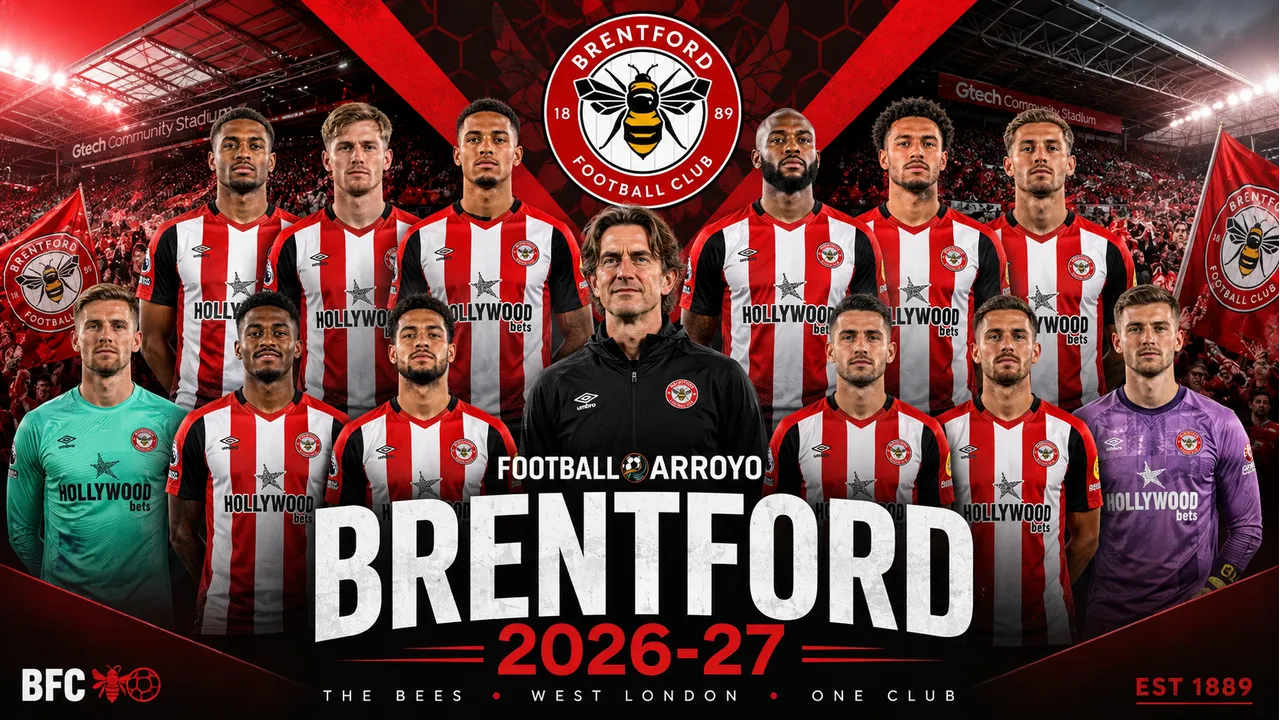
Brentford enter the 2026-27 season as one of the Premier League’s clearest examples of smart, sustainable growth. The Bees finished ninth in 2025-26 under Keith Andrews, matching their best Premier League position and showing that a major coaching transition could be handled without losing the club’s identity.
This complete Brentford 2026-27 guide covers the official first-team squad and shirt numbers, player cards, manager, Gtech Community Stadium, Joma kits, recent standings, history, honours, rivals, tactics, transfers and frequently asked questions.
Club Profile Summary
| Brentford Club Profile Summary | |
|---|---|
| Full name | Brentford Football Club |
| Nickname | The Bees |
| Founded | 1889 |
| Home stadium | Gtech Community Stadium, Brentford |
| Capacity | 17,250 |
| Owner | Matthew Benham |
| Head coach | Keith Andrews |
| 2025-26 finish | 9th in the Premier League |
| Kit supplier | Joma |
| Principal partner | Indeed |
About Brentford
Brentford Football Club were founded in 1889 and have grown from a community club in west London into an established Premier League team. The Bees spent more than a century at Griffin Park before moving to Gtech Community Stadium in 2020, a change that provided the facilities and matchday income needed for a higher competitive level.
The modern Brentford model is closely associated with owner Matthew Benham, data-informed recruitment and a willingness to find undervalued players before larger clubs. The strategy is supported by clear succession planning: when influential players or coaches leave, Brentford aim to replace the role and skill set rather than simply chase a famous name.
That process faced a major test when Thomas Frank left in 2025. Keith Andrews stepped up from set-piece coach to head coach and led the team to ninth, helped by a direct attacking style, dangerous restarts, long throws and the finishing of Igor Thiago.
2026-27 Season Preview
Brentford begin 2026-27 with continuity in the core of the squad and targeted additions around it. Andrews now has a full season of Premier League evidence to build upon. His side scored more goals from fast breaks and throw-ins than any other club in 2025-26, but opponents will be better prepared for those strengths, so the next step is to add variation without weakening the team’s direct threat.
Igor Thiago remains the attacking reference after scoring 22 league goals. Callum Wilson brings proven penalty-box movement and experience, while Kevin Schade, Dango Ouattara, Jaidon Anthony and Keane Lewis-Potter give the coach pace across the front line. Their movement can create space for Mikkel Damsgaard and Fábio Carvalho between midfield and attack.
Mamadou Sangaré adds ball-winning power in central midfield. Yehor Yarmoliuk takes the number six shirt, Mathias Jensen supplies passing quality and Vitaly Janelt offers tactical discipline. The balance of that group will determine whether Brentford can control more matches rather than relying only on transitions.
Defensively, Nathan Collins and Sepp van den Berg provide a strong centre-back base. Michael Kayode’s long throw is a genuine attacking weapon, while Rico Henry, Aaron Hickey and new arrival El Hadji Malick Diouf increase the options on the left. Caoimhín Kelleher gives the team a goalkeeper comfortable with both saves and longer distribution.
Brentford Squad 2026-27
The following squad and shirt numbers reflect Brentford’s official 2026-27 announcement and the Premier League’s current first-team listings. Each card follows the same compact format used in the Arsenal guide: player name, country and squad number only.
Goalkeepers
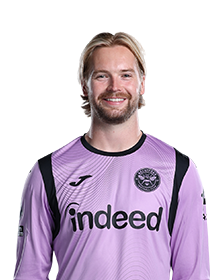
Caoimhín Kelleher
Ireland
No. 1

Hákon Valdimarsson
Iceland
No. 12

Ellery Balcombe
England
No. 31
Defenders

Aaron Hickey
Scotland
No. 2

Rico Henry
Jamaica
No. 3

Sepp van den Berg
Netherlands
No. 4

Kristoffer Ajer
Norway
No. 20

Nathan Collins
Ireland
No. 22

El Hadji Malick Diouf
Senegal
No. 25
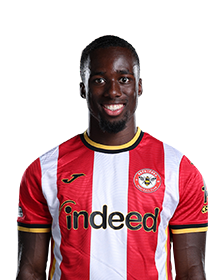
Michael Kayode
Italy
No. 33
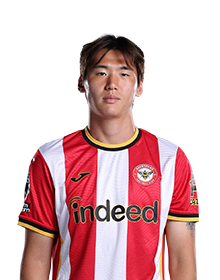
Kim Ji-Soo
South Korea
No. 36

Jannik Schuster
Austria
No. 44

Benjamin Fredrick
Nigeria
No. 48
Midfielders

Yehor Yarmoliuk
Ukraine
No. 6

Kevin Schade
Germany
No. 7

Mathias Jensen
Denmark
No. 8

Josh Dasilva
England
No. 10
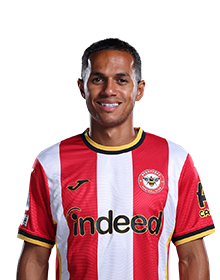
Fábio Carvalho
Portugal
No. 14

Antoni Milambo
Netherlands
No. 17

Mamadou Sangaré
Mali
No. 18

Mikkel Damsgaard
Denmark
No. 24

Vitaly Janelt
Germany
No. 27
Forwards
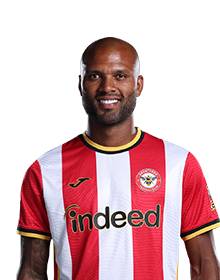
Igor Thiago
Brazil
No. 9

Dango Ouattara
Burkina Faso
No. 11

Callum Wilson
England
No. 13

Jaidon Anthony
England
No. 19

Keane Lewis-Potter
England
No. 23
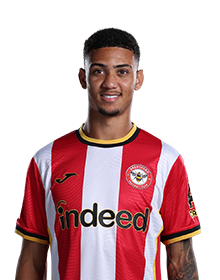
Gustavo Nunes
Brazil
No. 39

Kaye Furo
Belgium
No. 47
Brentford Standings
Brentford’s recent league record shows the move from survival to consistent top-half competition. The ninth-place finishes in 2022-23 and 2025-26 remain the club’s best in the Premier League, while the 2024-25 top-ten result demonstrated that the earlier success was not isolated.
| Season | Competition | Finish | Key note |
|---|---|---|---|
| 2022-23 | Premier League | 9th | First top-half Premier League finish |
| 2023-24 | Premier League | 16th | Survival during an injury-hit season |
| 2024-25 | Premier League | 10th | Second top-ten finish in four seasons |
| 2025-26 | Premier League | 9th | Equalled the club’s best Premier League position |
| 2026-27 | Premier League | In progress | Keith Andrews’ second season as head coach |
Manager: Keith Andrews

Keith Andrews was appointed head coach in June 2025 after joining Brentford as set-piece coach the previous summer. The former Republic of Ireland midfielder had previously worked with MK Dons, Sheffield United and Ireland’s senior and under-21 teams. His familiarity with the squad and staff allowed Brentford to promote from within during a period of significant change.
His first season delivered ninth place and confirmed that his ideas could translate to the top level. Brentford remained highly effective at restarts and direct attacks, but also reduced the number and quality of shots conceded. Andrews’ challenge now is to sustain those gains while creating more solutions against opponents who defend deeper.
Communication and role clarity are central to his approach. The squad contains established leaders, returning players such as Josh Dasilva and younger talents including Yarmoliuk, Milambo, Fredrick and Furo. Managing that range of experience is an important part of the 2026-27 plan.
Stadium: Gtech Community Stadium
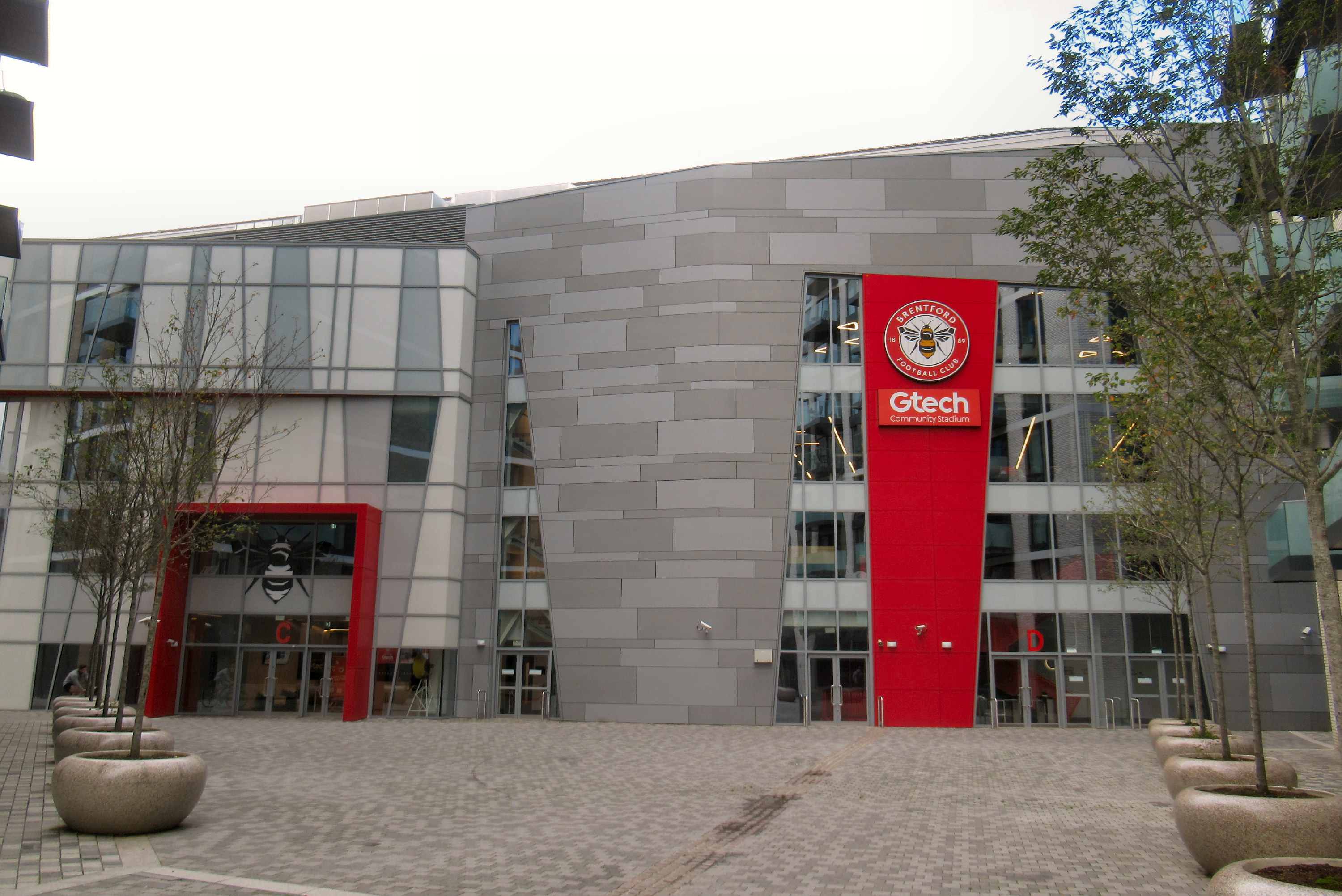
Gtech Community Stadium opened in summer 2020 and has a capacity of 17,250. Located close to Kew Bridge station, it replaced Griffin Park and gave Brentford a modern home with improved spectator facilities, hospitality and commercial opportunities.
The ground is compact enough to retain the intense atmosphere associated with Griffin Park. Stands sit close to the pitch, and the unusual multicoloured seating was designed to avoid the empty-seat appearance sometimes visible before kick-off. The stadium also hosts London Irish rugby fixtures.
For supporters, official ticket information remains essential because demand is high and sales often depend on membership or loyalty points. Matchday transport is helped by rail links, but visitors should check club guidance because the surrounding streets and parking options are limited.
Brentford Kits 2026-27
Joma supplies Brentford’s 2026-27 playing range. The club continues its policy of extending the life of selected home shirts, reducing the need for supporters to replace the primary kit every season.

Red and white stripes
Brentford continue with their two-season home shirt, preserving the club’s red-and-white striped identity for the 2026-27 campaign.

2026-27 change colours
The official away strip provides a clear contrast to the home colours and carries the new Indeed front-of-shirt partnership.
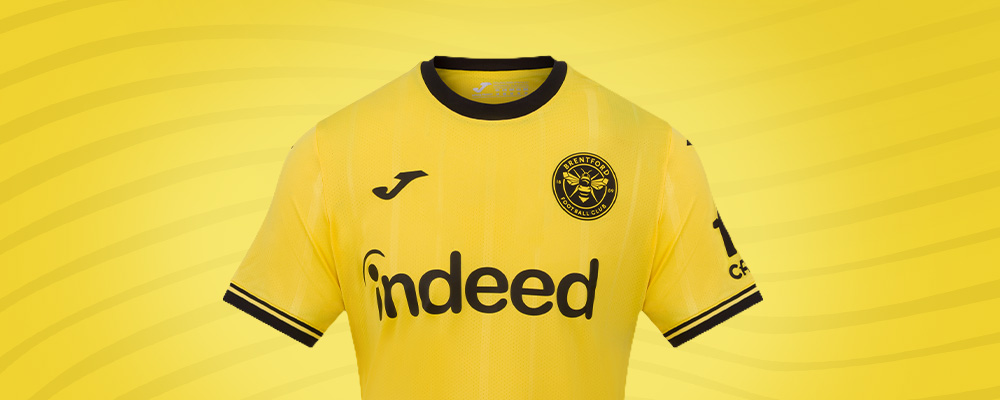
Yellow with black trim
A bold yellow base features a tonal graphic inspired by earlier Brentford shirts, black trim, a monochrome crest and 1889 at the back neck.
The familiar red-and-white home identity remains central, while the official away and third strips provide contrasting options. Indeed becomes the principal front-of-shirt partner across the men’s, women’s and academy match kits from 2026-27. The yellow third shirt is the most expressive design, combining a tonal heritage graphic with black trim and an 1889 sign-off.
Brentford History
Brentford were founded in 1889 and entered the Football League in 1920. The club’s first major rise came under manager Harry Curtis, who led the Bees to the Third Division South title in 1932-33 and the Second Division championship two years later.
Brentford finished fifth in the 1935-36 First Division, still the highest league placing in club history. Two further sixth-place finishes followed before the Second World War interrupted that successful era. The club won the London War Cup in 1942 but was relegated from the top flight in 1947.
Much of the post-war period was spent in the lower divisions. The 1991-92 Third Division title returned Brentford to the second tier, while the 2008-09 League Two championship and 2013-14 promotion to the Championship formed important stages in the modern climb.
Under Matthew Benham’s ownership, Brentford refined a data-led sporting model and eventually won the 2021 Championship play-off final. Premier League promotion ended a 74-year absence from the top flight, and the club has remained there ever since.
Brentford Honours
| Competition / achievement | Season | Significance |
|---|---|---|
| Second Division | 1934-35 | Champions and promoted to the top flight |
| Third Division South | 1932-33 | Champions under Harry Curtis |
| Third Division | 1991-92 | Champions and promoted to the second tier |
| League Two | 2008-09 | Champions during the modern rebuilding era |
| Championship play-offs | 2020-21 | Winners and promoted to the Premier League |
The honours reflect different eras of Brentford’s development. The 1934-35 title created the club’s original top-flight period, while the 2020-21 play-off success opened the current Premier League chapter.
Rivals and Regional Context
Brentford’s strongest rivalries are rooted in west London. Fulham and Queens Park Rangers are the most prominent local opponents, with league meetings often carrying an edge shaped by geography, shared transport routes and long periods in the same divisions.
Chelsea are another nearby club, although the competitive history is less continuous because the teams spent many decades at different levels. Brentford’s Premier League victories over Chelsea have given the modern fixture greater visibility.
The move from Griffin Park to the new stadium did not remove the local identity. Brentford remain closely connected with the surrounding community, and the Bees branding, red-and-white colours and matchday culture continue to distinguish the club within London football.
Tactical Outlook 2026-27
Brentford are likely to remain one of the league’s most direct and efficient teams. Kelleher can play through pressure but is also capable of accurate longer passes. That allows the side to bypass a press, compete for second balls and attack before the opposition settles.
Set pieces and long throws remain major weapons. Kayode can deliver from the touchline like a corner, Collins and van den Berg attack aerial balls, and Andrews’ background in restarts helps the squad create rehearsed advantages. These situations are especially valuable in tight matches.
In open play, Damsgaard and Carvalho can find pockets behind midfield while Schade, Ouattara and Anthony stretch the defensive line. Thiago’s movement and finishing give those attacks a reliable target. Wilson offers a different rhythm and can manage minutes when Brentford need experience late in games.
The biggest tactical question is how Brentford build against deep blocks. More sustained possession will require patience from Jensen, Yarmoliuk and Sangaré, coordinated full-back movement and better spacing around the penalty area. The team must add control without losing the speed that makes it dangerous.
Transfers and Squad Building
Brentford’s summer window focused on continuity and five first-team additions. Jaidon Anthony adds Premier League-proven wing play, Callum Wilson offers experienced striker depth, Mamadou Sangaré strengthens the midfield, Jannik Schuster develops the central defence and El Hadji Malick Diouf adds an athletic left-sided option.
The core of the ninth-place team remains. Collins, van den Berg, Kelleher, Damsgaard, Janelt, Yarmoliuk, Schade, Ouattara and Thiago provide stability, while contract extensions for Dasilva, Henry and Jensen preserve experience and continuity.
Brentford’s recruitment remains age-conscious but not age-restricted. Wilson is a deliberate veteran addition, whereas Schuster, Sangaré, Anthony and Diouf retain development or resale potential. That mix allows the club to compete now without abandoning its long-term model.
The squad also contains emerging players such as Fredrick, Milambo, Gustavo Nunes and Kaye Furo. Their pathway matters because Brentford’s sustainability depends on internal improvement as well as successful external recruitment.
Depth is especially important across a 38-match Premier League season. Injuries previously exposed thin areas at full-back and midfield, so the 2026-27 group is designed with more overlap between roles. Lewis-Potter can operate as a winger or left-back, Ajer can defend centrally or on the right, Hickey covers both sides and Carvalho can play wide or centrally. That flexibility gives Andrews alternatives without forcing a complete tactical reset. It also creates stronger competition in training, which is important for maintaining intensity during long periods without cup or European fixtures. Brentford do not have the financial margin to carry a large group of specialists who rarely play; multi-position players help the club keep the squad efficient while still preparing for different opponents and match states.
Brentford FAQ
Who is Brentford’s manager in 2026-27?
Keith Andrews is Brentford’s head coach. He was promoted internally in June 2025 after working as the club’s set-piece coach and guided the Bees to ninth place in his first Premier League season.
Where do Brentford play their home matches?
Brentford play at Gtech Community Stadium in west London. The ground opened in 2020 and replaced Griffin Park as the club’s home.
What is the capacity of Gtech Community Stadium?
The stadium has a capacity of 17,250 for football, with modern hospitality, accessible facilities and strong transport connections around Kew Bridge.
What did Brentford achieve in 2025-26?
The Bees finished ninth in the Premier League, equalling their best position in the competition and narrowly missing European qualification.
Who is Brentford’s main striker?
Igor Thiago leads the attack after scoring 22 Premier League goals in 2025-26. Callum Wilson adds experience and Kaye Furo provides a younger option.
What are Brentford’s traditional colours?
Brentford’s traditional home colours are red and white stripes, normally paired with dark shorts. The club are nicknamed the Bees.
Who are Brentford’s key 2026-27 signings?
Jaidon Anthony, Callum Wilson, Mamadou Sangaré, Jannik Schuster and El Hadji Malick Diouf were the five first-team additions highlighted by the club after the summer window.
Who owns Brentford Football Club?
Matthew Benham is Brentford’s owner. His data-led approach has shaped the club’s recruitment, football operations and long-term rise.
When did Brentford reach the Premier League?
Brentford won the 2020-21 Championship play-off final and entered the Premier League in 2021-22, returning to the English top flight after 74 years.
Who are Brentford’s main rivals?
Fulham and Queens Park Rangers are the most prominent west London rivals, while matches with Chelsea also carry strong local interest.