FIFA World Cup 2026 Venues, Host Cities and Stadiums Guide

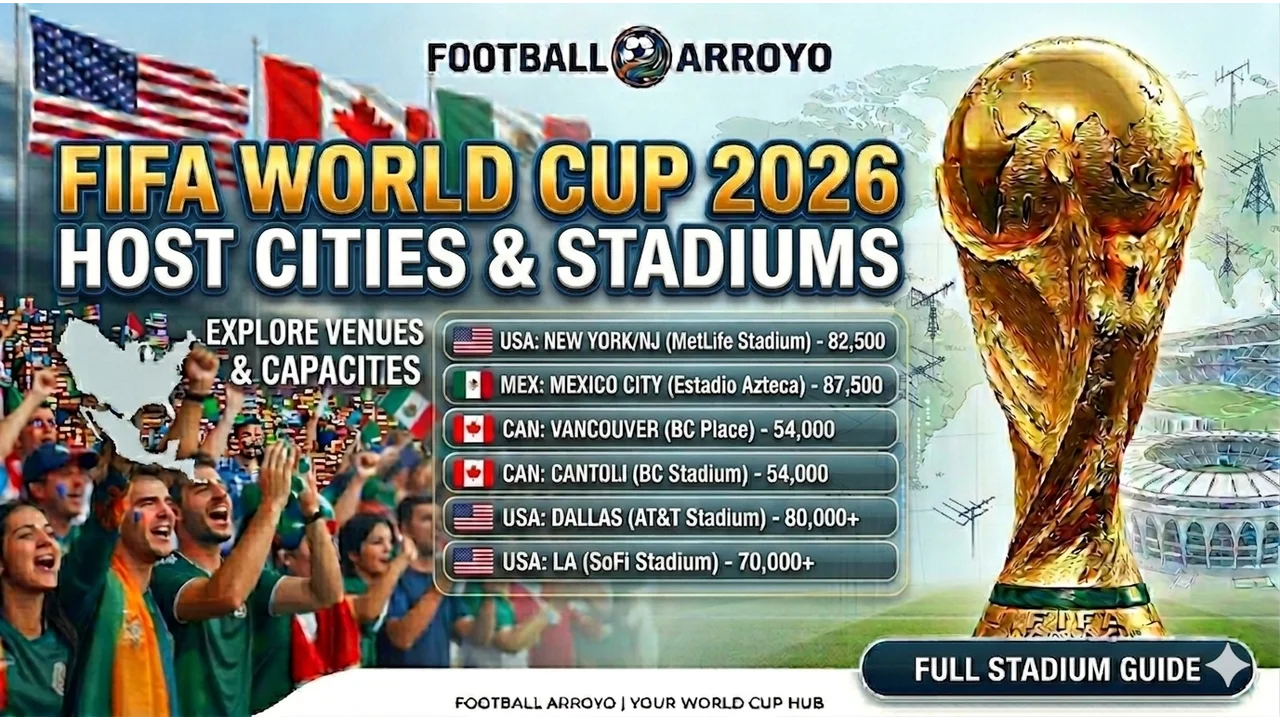
The FIFA World Cup 2026 Venues are one of the biggest talking points ahead of the tournament. Fans worldwide are eager to know which stadiums will host matches across the United States, Canada, and Mexico.
Since this edition will be the largest FIFA World Cup ever, the selected venues will play a major role in shaping the tournament experience. From iconic NFL stadiums to historic football arenas, the FIFA World Cup 2026 stadiums promise world-class facilities and unforgettable atmospheres.
This guide covers all the confirmed FIFA World Cup 2026 Venues, including host cities, stadium capacities, and what makes each location special.
FIFA World Cup 2026 Host Countries and Venue Overview
The 2026 FIFA World Cup will be jointly hosted by the United States, Canada, and Mexico. This marks the first time in history that three nations will host the tournament together.
Additionally, FIFA expanded the event to 48 teams, which means more matches and more host venues than any previous World Cup. A total of 16 cities will host matches during the tournament.
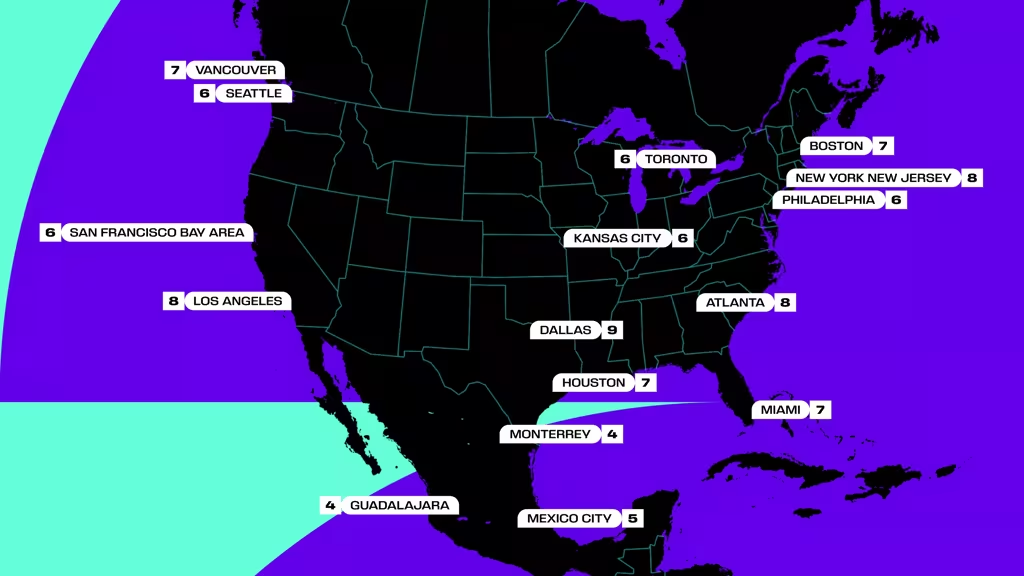
Here is a quick overview of the host distribution:
| Country | Number of Host Cities | Key Stadiums |
|---|---|---|
| United States | 11 | MetLife Stadium, SoFi Stadium, AT&T Stadium |
| Canada | 2 | BMO Field, BC Place |
| Mexico | 3 | Estadio Azteca, Estadio BBVA, Estadio Akron |
As a result, fans will enjoy matches in some of North America’s biggest and most modern football venues.
Full List of FIFA World Cup 2026 Venues
The confirmed FIFA World Cup 2026 Venues include a mix of legendary stadiums and cutting-edge arenas.
United States Venues
The United States will host the majority of matches. Therefore, it has the highest number of host cities.
| Host City | Stadium | Capacity |
|---|---|---|
| New York/New Jersey | MetLife Stadium | 82,500 |
| Los Angeles | SoFi Stadium | 70,240 |
| Dallas | AT&T Stadium | 80,000 |
| Atlanta | Mercedes-Benz Stadium | 71,000 |
| Houston | NRG Stadium | 72,220 |
| Philadelphia | Lincoln Financial Field | 69,000 |
| Seattle | Lumen Field | 69,000 |
| San Francisco Bay Area | Levi’s Stadium | 68,500 |
| Boston | Gillette Stadium | 65,878 |
| Miami | Hard Rock Stadium | 65,326 |
| Kansas City | Arrowhead Stadium | 76,416 |
These stadiums regularly host NFL games and international sporting events. Consequently, they are well equipped for a tournament of this scale.
Canada Venues
Canada will host matches in two major cities.
| Host City | Stadium | Capacity |
|---|---|---|
| Toronto | BMO Field | 30,000 |
| Vancouver | BC Place | 54,500 |
Although Canada has fewer venues, both stadiums offer strong infrastructure and passionate football audiences.
Mexico Venues
Mexico will provide three venues for the tournament.
| Host City | Stadium | Capacity |
|---|---|---|
| Mexico City | Estadio Azteca | 87,523 |
| Monterrey | Estadio BBVA | 53,500 |
| Guadalajara | Estadio Akron | 49,850 |
Most importantly, Estadio Azteca will become the first stadium in history to host matches in three FIFA World Cups.
Largest FIFA World Cup 2026 Stadiums by Capacity
Several FIFA World Cup 2026 stadiums are among the largest in North America. These venues are expected to host high-profile matches such as quarterfinals, semifinals, and the final.
| Stadium | City | Capacity |
|---|---|---|
| Estadio Azteca | Mexico City | 87,523 |
| MetLife Stadium | New York/New Jersey | 82,500 |
| AT&T Stadium | Dallas | 80,000 |
| Arrowhead Stadium | Kansas City | 76,416 |
| NRG Stadium | Houston | 72,220 |
These massive venues ensure large attendance numbers. Furthermore, they create the kind of electric atmosphere expected in a World Cup.
FIFA World Cup 2026 USA Stadiums
MetLife Stadium, New York/New Jersey
MetLife Stadium in New York/New Jersey has an official FIFA World Cup 2026 capacity of 78,576. It will host 8 (including Final), including Final venue. Largest stadium in the tournament and host of the World Cup Final. Weather profile: August (Final) — warm and humid, 28–32°C.
SoFi Stadium, Los Angeles
SoFi Stadium in Los Angeles has an official FIFA World Cup 2026 capacity of 69,650. It will host 6, including Quarter-final venue. Newest stadium in the tournament, with a giant dual-sided halo video board above the field. Weather profile: June–July — warm and dry, 24–29°C, low humidity.
AT&T Stadium, Dallas
AT&T Stadium in Dallas has an official FIFA World Cup 2026 capacity of 70,122. It will host 7 (including Semi-final), including Semi-final venue. Hosts a semi-final and features one of the largest in-stadium HD video screens in world sport. Weather profile: June–July — hot and humid, 32–38°C. Retractable roof improves in-stadium comfort.
Levi’s Stadium, San Francisco Bay Area
Levi’s Stadium in San Francisco Bay Area has an official FIFA World Cup 2026 capacity of 69,391. It will host 6, including Group stage and Round of 32. Hosts Super Bowl LX and six FIFA World Cup matches in the same year, 2026. Weather profile: June–July — warm and dry, mid-to-high 20s°C, evenings cooler.
Hard Rock Stadium, Miami
Hard Rock Stadium in Miami has an official FIFA World Cup 2026 capacity of 64,091. It will host 6, including Quarter-final venue. One of the most event-tested venues in North America with a massive Latin American supporter base. Weather profile: June–July — hot and humid, 30–35°C, with possible afternoon thunderstorms.
Arrowhead Stadium, Kansas City
Arrowhead Stadium in Kansas City has an official FIFA World Cup 2026 capacity of 67,513. It will host 5, including Group stage and Round of 32. Consistently ranked among the loudest stadiums in American professional sports. Weather profile: June–July — warm and humid, 28–33°C, with possible thunderstorms.
Lincoln Financial Field, Philadelphia
Lincoln Financial Field in Philadelphia has an official FIFA World Cup 2026 capacity of 65,827. It will host 6, including Round of 32 and Quarter-final. Sits in South Philadelphia Sports Complex, one of North America’s densest major sports districts. Weather profile: June–July — warm and humid, 26–31°C.
Lumen Field, Seattle
Lumen Field in Seattle has an official FIFA World Cup 2026 capacity of 65,123. It will host 5, including Group stage and Round of 32. Known worldwide for crowd noise and one of the strongest supporter cultures in the United States. Weather profile: June–July — mild and often overcast, 18–23°C, with lower humidity.
Gillette Stadium, Boston
Gillette Stadium in Boston has an official FIFA World Cup 2026 capacity of 63,815. It will host 5, including Group stage and Round of 32. Most suburban venue in the lineup with one of the strongest supporter cultures in the Northeast. Weather profile: June–July — warm with humidity, 22–28°C, rain possible.
Mercedes-Benz Stadium, Atlanta
Mercedes-Benz Stadium in Atlanta has an official FIFA World Cup 2026 capacity of 67,382. It will host 7 (including Semi-final), including Semi-final venue. Hosts a semi-final and features the tournament’s most distinctive retractable petal roof design. Weather profile: June–July — hot and humid, 30–35°C. Roof and air management improve inside comfort.
NRG Stadium, Houston
NRG Stadium in Houston has an official FIFA World Cup 2026 capacity of 68,311. It will host 6, including Group stage and Round of 32. Gives Texas a second major World Cup venue alongside AT&T Stadium in Dallas. Weather profile: June–July — very hot and humid, often 33–38°C. Roof is essential for comfort.
FIFA World Cup 2026 Mexico Stadiums
Estadio Azteca, Mexico City
Estadio Azteca in Mexico City carries an official tournament capacity of 83,264. It will host 5 (including Opening Match), with Opening match venue on the venue assignment map. First stadium in history to host three FIFA World Cup opening matches: 1970, 1986, and 2026. Weather profile: June — mild at altitude, 18–24°C, with possible afternoon rain at 2,240m elevation.
Estadio Akron, Guadalajara
Estadio Akron in Guadalajara carries an official tournament capacity of 44,330. It will host 4, with Group stage only on the venue assignment map. Home of Club Deportivo Guadalajara (Chivas), one of Mexico’s most supported clubs. Weather profile: June — warm at altitude, 22–28°C, with possible rainy-season afternoon showers.
Estadio BBVA, Monterrey
Estadio BBVA in Monterrey carries an official tournament capacity of 50,113. It will host 4, with Group stage only on the venue assignment map. One of Latin America’s most visually striking stadiums thanks to its mountain backdrop. Weather profile: June — hot and dry, 30–36°C, with lower humidity than coastal cities.
FIFA World Cup 2026 Canada Stadiums
BC Place, Vancouver
BC Place gives Vancouver a direct place in the host network at 48,821 capacity. It is scheduled for 5 with Group stage and Round of 32. Most city-centre accessible stadium in the tournament with direct SkyTrain integration. Weather profile: June–July — mild and pleasant, 18–24°C, with low humidity.
BMO Field, Toronto
BMO Field gives Toronto a direct place in the host network at 44,315 capacity. It is scheduled for 4 with Group stage only. Smallest venue in the 2026 lineup, yet located in Canada’s biggest football market. Weather profile: June–July — warm and humid, 22–28°C.
Which Stadium Will Host the FIFA World Cup 2026 Final?
One of the biggest questions surrounding the FIFA World Cup 2026 Venues is the final venue.
Current expectations strongly point toward MetLife Stadium in New York/New Jersey hosting the World Cup Final. This stadium has the size, infrastructure, and international appeal required for the tournament’s biggest match.
Moreover, MetLife Stadium has hosted major international events before, making it a strong candidate for the grand finale.
Most Iconic FIFA World Cup 2026 Venues
While every venue is important, some stadiums stand out due to history or innovation.
Estadio Azteca
Located in Mexico City, Estadio Azteca is one of football’s most historic stadiums. It hosted the 1970 and 1986 World Cup finals.
This venue is famous for legendary moments, including Diego Maradona’s performances in 1986. Therefore, it remains a centerpiece of the FIFA World Cup 2026 Venues.
SoFi Stadium
SoFi Stadium in Los Angeles is one of the most advanced sports venues in the world.
Its state-of-the-art design and premium fan experience make it one of the standout venues for 2026.
Mercedes-Benz Stadium
Located in Atlanta, this stadium is known for its retractable roof and innovative design.
Additionally, it has hosted major football tournaments and large international crowds.
Why FIFA Selected These Venues
FIFA carefully selected these stadiums based on infrastructure, capacity, and transportation access.
Each host city offers:
- Large-capacity stadiums
- International airports
- Modern accommodations
- Reliable transportation networks
- Proven event-hosting experience
As a result, the FIFA World Cup 2026 host cities are well prepared to welcome fans from around the world.
Economic Impact of FIFA World Cup 2026 Host Cities
Hosting World Cup matches will bring major economic benefits to the selected cities.
These benefits include:
- Increased tourism
- Higher hotel bookings
- Growth in local business revenue
- International media exposure
- Infrastructure improvements
For example, cities like Dallas, Los Angeles, and Toronto are expected to see a significant rise in tourism spending during the tournament.
Therefore, the FIFA World Cup 2026 Venues are not only sports locations but also economic growth drivers.
Travel Tips for Visiting FIFA World Cup 2026 Venues
Fans planning to attend matches should prepare early.
Book Accommodation Early
Hotels in host cities will fill quickly. Therefore, early booking is essential.
Plan Transportation in Advance
Each city has different transit systems. Researching local transport can save time and money.
Check Stadium Policies
Venue policies on bags, tickets, and entry rules may differ. Always review official stadium guidelines before match day.
Preparing ahead ensures a smoother experience while visiting the FIFA World Cup 2026 stadiums.
FAQs About FIFA World Cup 2026 Venues
Conclusion
The FIFA World Cup 2026 Venues represent the biggest and most ambitious host setup in tournament history. With 16 host cities, three countries, and some of North America’s most impressive stadiums, the tournament promises an unforgettable experience.
From the legendary Estadio Azteca to the modern SoFi Stadium, every venue brings something unique. As the tournament approaches, understanding the FIFA World Cup 2026 stadiums and host cities will help fans plan their experience and build excitement for the world’s biggest football event.
If you are preparing for the 2026 tournament, keep following updates on stadium assignments, match schedules, and ticket details so you are ready for the action.